
Most visitors do not need a car in Chicago. The CTA 'L' train connects the Loop, Wicker Park, Wrigleyville, O'Hare, and dozens of neighborhoods in between, and overnight service runs on the Blue and Red lines. If you plan to stay within the city, a combination of the 'L', buses, rideshare, and Divvy bikes covers nearly every trip you'll want to make.
Key facts at a glance
- A single CTA 'L' or bus ride costs $2.50, and a 30-day unlimited pass costs $105. See CTA Fares for current pricing.
- The Blue Line runs 24 hours a day, 7 days a week, connecting O'Hare Airport to the Loop. The Red Line also runs overnight.
- Divvy bike-share has 800+ stations across Chicago. A single 30-minute ride costs $1 to unlock plus $0.17 per minute, or $15 for a day pass. See Divvy Bikes.
- Downtown Chicago parking garages charge $25 to $50 per day. Street parking in the Loop is scarce and metered.
- Metra commuter rail serves suburbs including Evanston, Oak Park, and Aurora. Fares start at $3.25 depending on zone. See Metra.
- Chicago's grid system makes walking predictable. Eight city blocks equal roughly one mile.
- Rideshare pickup zones at O'Hare are on Level 1 of the parking garage. At Midway, rideshare pickups are on the lower level of the terminal.
Chicago transport options compared
| Option | Typical cost | Convenience |
|---|---|---|
| CTA 'L' Train | $2.50 per ride / $105 monthly unlimited | Very high |
| CTA Bus | $2.50 per ride (free transfer within 2 hrs) | High |
| Taxi / Rideshare | $12 to $35 for most city trips | High |
| Rental Car | $50 to $90 per day plus $25 to $50 parking | Medium |
| Metra Commuter Rail | $3.25 to $9.50 depending on zone | Medium |
| Divvy Bikes | $1 unlock + $0.17/min or $15 day pass | High |
When you might need a car in Chicago
A car makes sense for specific trips that take you beyond the CTA network or involve logistics the train can't handle.
Day trips to places like Galena, Indiana Dunes National Park, or the Wisconsin Dells require a car. None of these destinations have practical transit connections from Chicago.
If you're visiting suburban areas like Naperville, Schaumburg, or Orland Park for shopping or business, Metra gets you to some of them, but the last mile from the station to your destination is often a long walk or an expensive rideshare. A car saves time.
Traveling with young children, large luggage, or mobility equipment makes the 'L' stairs and crowded platforms harder to manage. Rideshare handles most of these situations, but if you have multiple bags or a stroller, a rental car for the duration of your stay can reduce friction.
If you're attending multiple events in different suburbs on the same day, such as a wedding in Wheaton followed by a dinner in Evanston, coordinating Metra schedules adds complexity that a car eliminates.
When you definitely don't need a car in Chicago
Staying in the Loop, River North, Lincoln Park, Wicker Park, or Lakeview puts you within walking distance of CTA 'L' stations on multiple lines. You can reach Millennium Park, Navy Pier, the Art Institute, and the Museum Campus without a car.
Flying into O'Hare? Take the Blue Line directly to the Loop for $2.50. The ride takes about 45 minutes and drops you at Clark/Lake or Washington stations. Flying into Midway? The Orange Line connects to the Loop in about 30 minutes for the same fare.
Attending a Cubs game at Wrigley Field means taking the Red Line to Addison station, a 1-minute walk from the ballpark entrance. Driving and parking near Wrigley on game day costs $40 to $60 and adds 30 to 60 minutes of traffic.
A weekend of Chicago tourism, covering the Riverwalk, the 606 Trail, Lincoln Park Zoo, and the lakefront, is faster and cheaper on foot, bike, and the 'L' than in a car. You avoid parking costs and traffic on Lake Shore Drive.
How to get around Chicago without a car
Download the Ventra app before you arrive. You can load a transit card, buy passes, and tap your phone at any CTA turnstile or bus reader. No physical card required.
Use the CTA Train Tracker to see real-time arrivals at any 'L' station. The app shows exact minutes until the next train, which matters when you're deciding whether to walk to the next station or wait.
For bike trips, the Divvy app shows available bikes and open docks at every station. The Lakefront Trail runs 18.5 miles along Lake Michigan and connects neighborhoods from Edgewater in the north to South Shore in the south, all car-free.
For late-night trips after 'L' service thins out on most lines, Uber and Lyft are reliable in Chicago. Surge pricing peaks between 2 a.m. and 3 a.m. on weekends when bars close. Budget $15 to $25 for most city trips at that hour.
Metra's Ventra app integration lets you buy and display commuter rail tickets on your phone. If you're heading to Evanston for the day, the Purple Line 'L' is faster and cheaper than Metra for that specific route.
Chicago's CTA 'L' network explained
The 'L' has eight color-coded lines covering 145 stations across the city and into some suburbs. The Red and Blue lines run 24 hours. The other six lines, Green, Brown, Orange, Pink, Purple, and Yellow, operate roughly from 4 a.m. to 1 a.m., with reduced frequency late at night.
The Loop elevated structure in downtown Chicago is shared by the Brown, Green, Orange, Pink, and Purple lines. Trains run every 3 to 8 minutes during rush hour on most lines, and every 10 to 15 minutes off-peak.
The Brown Line connects Ravenswood and Lincoln Square to the Loop. The Green Line reaches the South Side neighborhoods of Bronzeville and Woodlawn, including the stop for the Museum of Science and Industry at Cottage Grove. The Orange Line serves Midway Airport.
For a full map and service alerts, check CTA System Map.
Parking and driving realities in Chicago
Chicago's street parking system uses the ParkChicago app for metered spots. Rates in the Loop run $6.50 per hour. Residential neighborhoods have permit zones that block non-residents during peak hours.
Private parking garages near Michigan Avenue charge $35 to $50 for a full day. Near Wrigley Field on game days, private lots charge $40 to $60. Near Soldier Field for Bears games, lots charge $50 to $80.
Chicago's grid makes driving predictable, but Lake Shore Drive and the Kennedy Expressway (I-90/94) back up during rush hour, typically 7 a.m. to 9 a.m. and 4 p.m. to 7 p.m. on weekdays. If you rent a car, plan arrivals and departures outside those windows.
Chicago has strict towing enforcement. Parking within 15 feet of a fire hydrant, in a bus stop, or in a rush-hour no-parking zone results in a tow. Retrieving a towed car from the Chicago Auto Pound costs $200 or more plus the original ticket.
Sustainable travel in Chicago
Choosing the CTA over a rental car cuts your per-trip carbon output by a significant margin. Chicago's transit system moves roughly 1.5 million riders on an average weekday, and each rider who takes the 'L' instead of driving removes one car from city streets. Divvy's bike-share program logged over 6 million rides in 2023, and the city's expanding protected bike lane network makes cycling a practical choice for trips under 3 miles.
Official sources
- Chicago Transit Authority (CTA) — fares, maps, real-time train and bus tracking.
- Metra Commuter Rail — schedules, fares, and Ventra ticket purchasing for suburban rail.
- Divvy Bike Share — station map, pricing, and app download.
- City of Chicago Parking — metered parking rates, permit zones, and towing information.
FAQs
Common Questions
Take the Blue Line 'L' train from O'Hare Airport directly to the Loop for $2.50. The ride takes about 45 minutes and drops you at multiple downtown stations including Clark/Lake and Washington. A rideshare or taxi covers the same route for $35 to $55 depending on traffic.
The Blue Line and Red Line run 24 hours a day, 7 days a week. The other six lines operate roughly from 4 a.m. to 1 a.m. with reduced frequency late at night. For overnight trips on non-Blue/Red routes, rideshare is the practical option.
For a trip focused on city neighborhoods, attractions, and restaurants, a rental car adds cost and parking headaches without much benefit. The CTA 'L' and rideshare cover the city well. A rental makes sense if you plan day trips to Indiana Dunes, Galena, or suburban destinations that Metra doesn't serve.
The Ventra app handles CTA and Metra payments and lets you tap your phone at turnstiles. For real-time arrivals, the CTA Train Tracker shows exact minutes until the next train at any station. Google Maps and Apple Maps both give accurate CTA routing with live departure times.
Divvy has 800+ docking stations across Chicago. You unlock a bike through the Divvy app or at the kiosk using a credit card. A day pass costs $15 and covers unlimited 3-hour rides. Classic bikes cost $1 to unlock plus $0.17 per minute without a pass. E-bikes cost $1 to unlock plus $0.20 per minute.
Take the Red Line to Addison station. The station exit puts you about a 1-minute walk from the Wrigley Field main entrance on Clark Street. Trains run frequently on game days, and the Red Line operates 24 hours, so you can get back downtown after a night game without worrying about last trains.
Explore
Hotels in Chicago
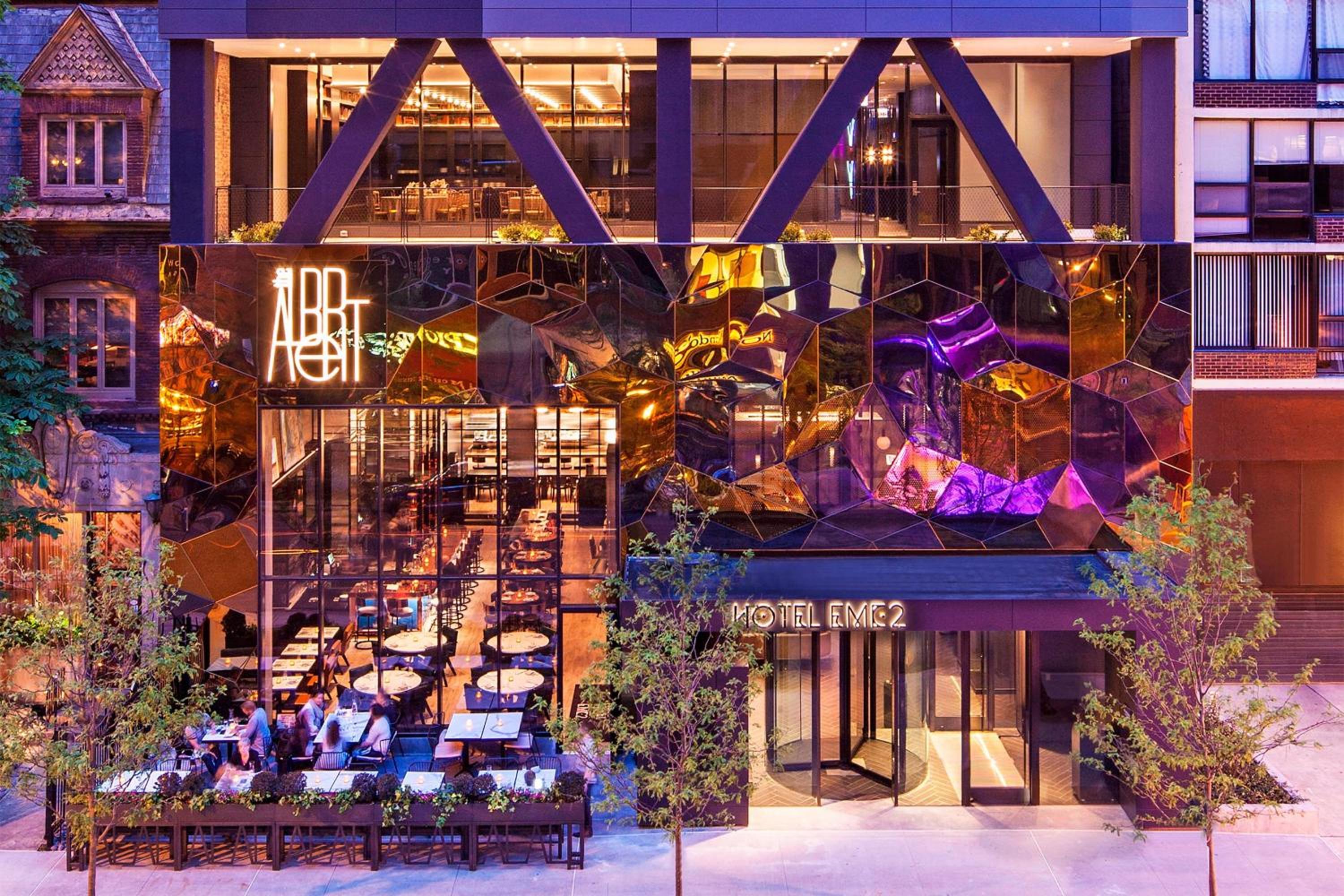
Hotel EMC2, Autograph Collection
228 East Ontario Street
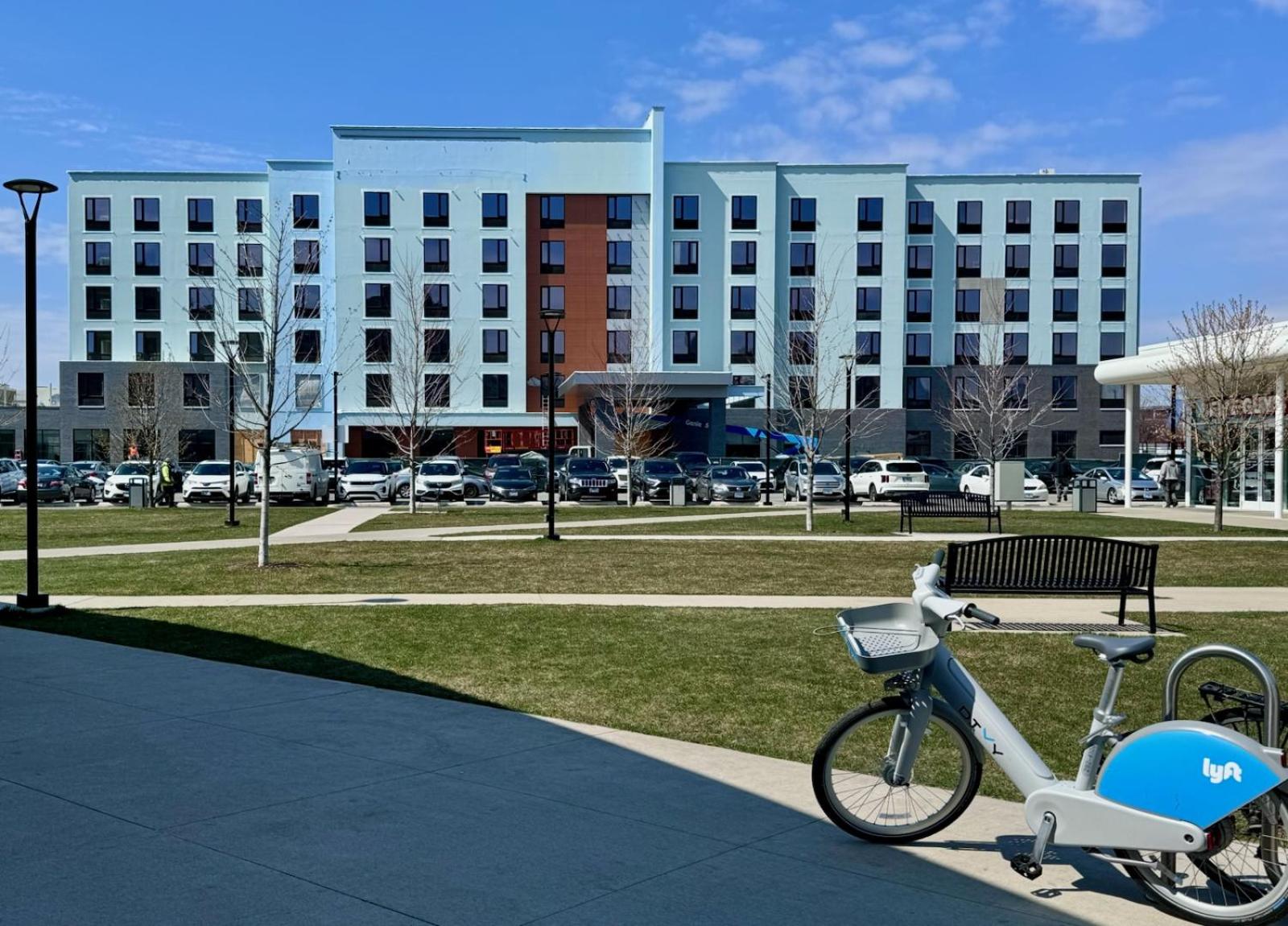
Hampton Inn & Suites Chicago Medical District Uic
710 S Seeley Avenue
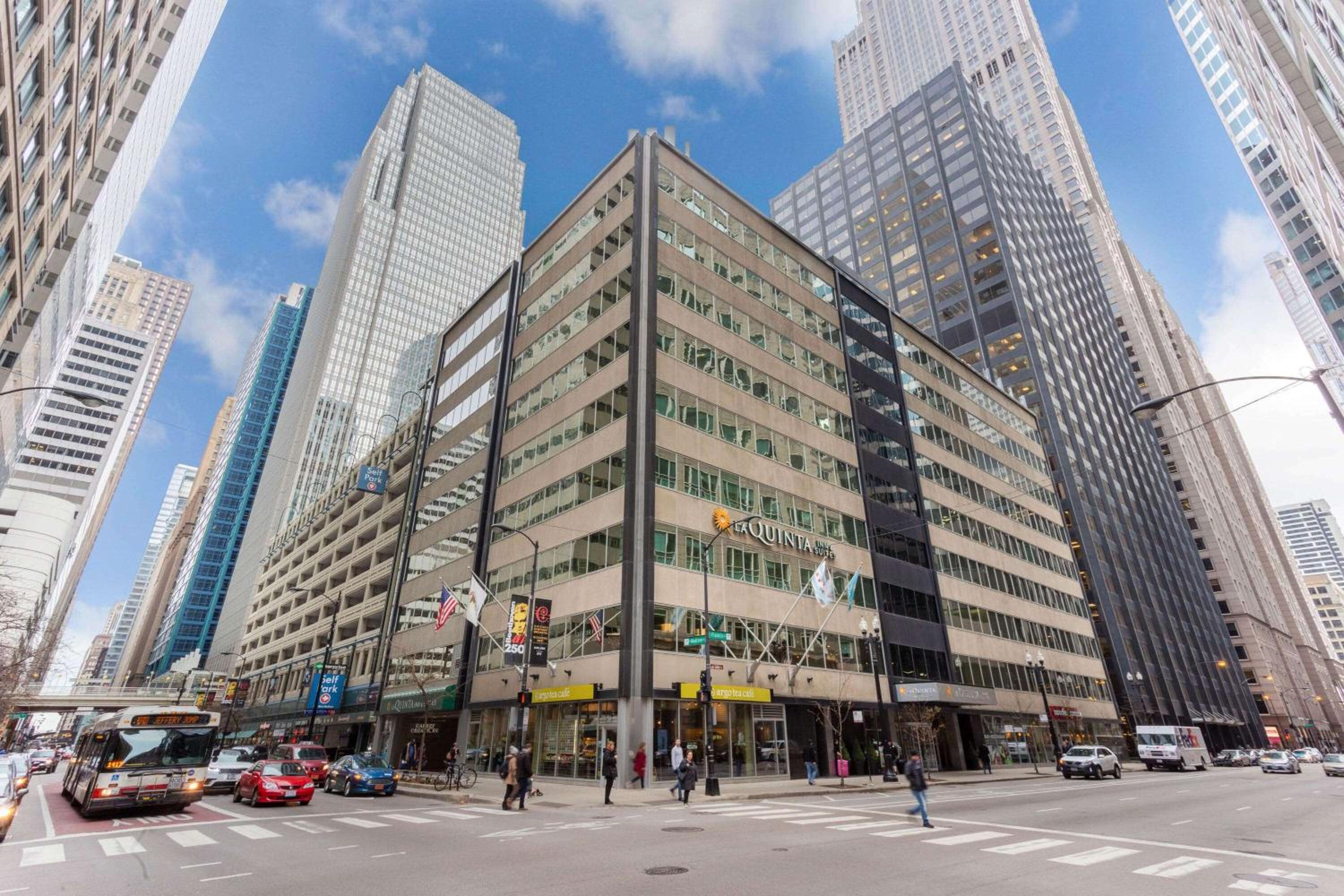
La Quinta Inn & Suites by Wyndham Chicago Downtown
1 South Franklin St

Trump International Hotel & Tower Chicago
401 North Wabash Avenue
Stay in the loop
Travel deals, sustainability updates, and no spam. Ever.